

Individuals diagnosed with Autism and Autism Spectrum Disorder (ASD), experience a range of neurological differences that affect how they communicate, interact, and perceive the world.
Everyone’s experience is different, but for some it may affect how they react around motor vehicles, along roadways or in high traffic areas.
Challenges that could occur:
Sensory Overload: Loud engines, honking horns, flashing lights, or even the smell of exhaust can be overwhelming and may trigger distress or an episode for someone diagnosed with Autism or ASD.
Safety Awareness: Some people with these medical conditions may not fully grasp the dangers of traffic. They might dart into the street impulsively or struggle to judge the speed and distance of oncoming vehicles.
Wandering: Some individuals these medical conditions tend to wander, which can be especially dangerous near busy roads or parking areas.
Executive Functioning Challenges: Planning and sequencing actions - like waiting for a walk signal, checking both ways, and crossing quickly - can be difficult to coordinate.
Fear or Anxiety: Crowded sidewalks, unpredictable vehicle movements, or unfamiliar environments can cause anxiety, making it hard to stay calm and focused.
Motorists may be alerted to areas where individuals diagnosed with Autsim and ASD live, work or play, so that they might reduce their speeds and be vigilant, for everyone’s safety. However, the effectiveness of these types of “warning” signs as a deterrent to pedestrian/vehicle crashes has been difficult to measure. The Person with Autism warning sign is not intended to regulate speed and is not a guarantee that pedestrian/vehicle crashes will be avoided. Additionally, the Person with Autism warning sign may bring unwanted attention to the area.
Parents or legal guardians are allowed to apply for these signs to be installed on a state-maintained roadway when the diagnosed individual is living at permanent residence.
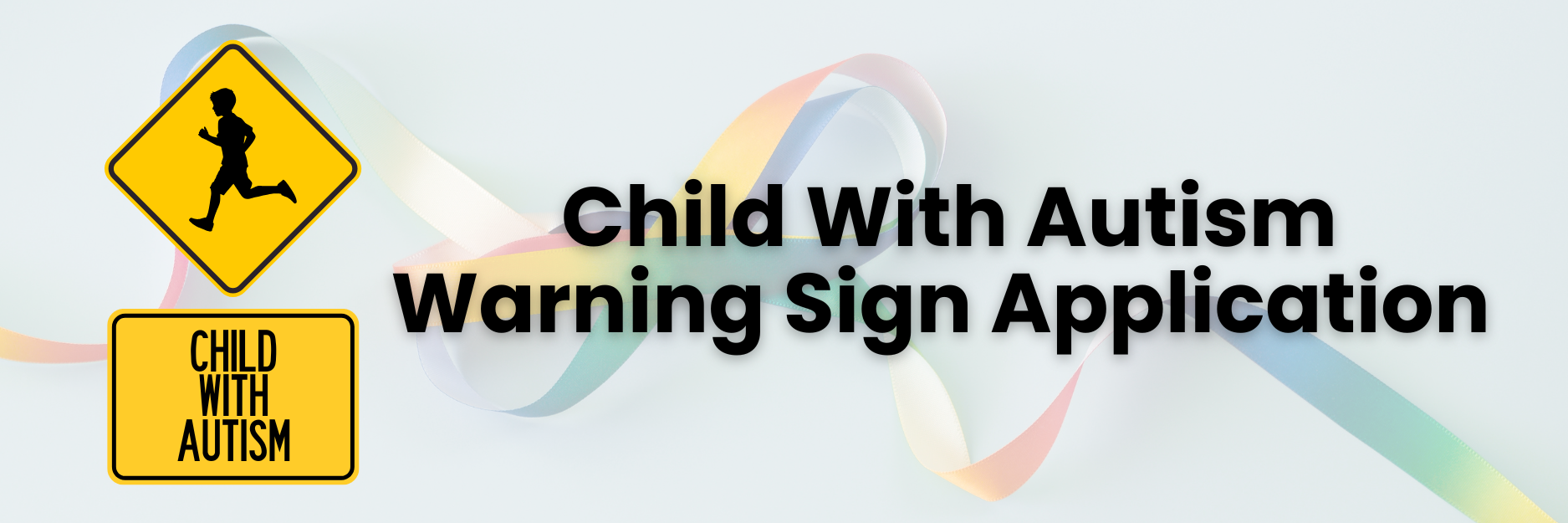
The approved sign assembly for DelDOT installations will consist of a Watch Children or Pedestrian Warning sign with a plaque underneath that states Person with Autism.

Step 1: Verify that you are the parent or legal guardian of someone diagnosed with Autism or ASD.
Step 2: Have a physician complete the below medical certification form on behalf of the diagnosed. Please have this document ready when you complete the online application.

Step 3: Get a letter of support from your Homeowners’ or Civic Association.
If you live in a development with no HOA or Civic Association, please contact your local senator or representative for assistance.
Find My Legislator - Delaware General Assembly
You will need the letter to complete the application.
Step 4: Complete the online appliction accessible below.
Once completed you will receive an email notification from the DelDOT Traffic Studies team to review and process.
Requests for the Person with Autism warning sign must be submitted utilizing this online form. The form must be signed by the adult, parent or guardian. Once completed you will receive an email notification from the DelDOT Traffic Studies team to review and process. If installation is feasible, the appropriate location of the sign(s) will be in accordance with traffic operations and terrain within the proximity of the residence.

It is the responsibility of the person applying, parent or legal guardian, to notify DelDOT Traffic Engineering if any of the following occur:
- You are moving to a new location.
- You determine the sign is no longer needed.
- You contact information changes.