

Work Zone Safety
Slow Down, we have families too!
Twenty-one crashes have occurred in a Delaware Department of Transportation (DelDOT) work zone since 2024. Five employees were struck as well as 16 DelDOT vehicles.
Since 2023, in all work zones across the state, including those not operated by DelDOT, 84 people, including civilians, have been injured and 21 were killed.
Any time a civilian vehicle enters our work zones there is a potential for serious injury or fatality.
We mark work zones with signs, cones, and other traffic control measures. Some work zones utilize Truck Mounted Attenuators (TMA’s), a device mounted to the back of a truck that absorbs impact when struck, on site to better alert motorists, but responsibility for safer roads is shared by all road users.
We ask all road users to do their part: don’t speed, be proactive, stay off your phone, don’t drive under the influence, stay alert especially when traveling through a work zone, and move over when approaching work zones or when approaching any stationary vehicle with flashing lights on the roadside including emergency response vehicles.
Highway workers may often among the victims work zone crashes, but drivers must understand that four out of five victims are drivers or their passengers.Generally, crashes occur when drivers speed through a work zone or do not pay attention to the changing road conditions and run into other vehicles, highway equipment, or safety barriers, or drive off the roadway completely. The primary causes of work zone crashes are following too closely and inattentive driving.
*2025 values based on preliminary data and are subject to change
When you see the signs, when you see the flashing lights, when you see the barrels and cones, slow down, eliminate distractions, stay alert, and be extra cautious. By doing these things, motorists can help reduce work zone crashes on our roadways.
Some simple tips for improving work zone safety include:
- When you see the “orange and black,” be extra cautious.
- Warning signs will let you know what to expect.
- Barrels or cones will delineate your path of travel.
- Flag people will help direct you along the way.
- Avoid distractions.
- Don’t tailgate.
- Don’t change lanes.
- Slow down and expect the unexpected.
- Reduce speed when approaching toll booths.
- Move over a lane, if safe, or slow down significantly when approaching any stationary vehicle with flashing lights on the roadside. This applies to emergency vehicles, tow trucks, utility trucks, and passenger vehicles with hazards.
For more information on the goal to reduce fatalities and serious injuries on all public roads, select the Delaware Strategic Highway Safety Plan tab on this page.
Want to join us in our goal of zero deaths on Delaware roadways? Take the Be DelAWARE pledge today. Just select the Be DelAWARE tab on this page.
Work Zone Safety Awareness Month
April is Work Zone Awareness Month and the third week in April is National Work Zone Awareness Week (NWZAW). Since 1999 DelDOT and other organizations, including the FHWA, the American Association of State Highway and Transportation Officials (AASHTO) and the American Traffic Safety Services Association (ATSSA) to coordinate raise awareness and improve outreach in hopes of reducing our work zone crash figures to ZERO.
Move Over Law
Title 21, Section 4134(b) of the Delaware Code requires motorists to move over for stopped emergency, police, tow trucks or DelDOT vehicles, when those vehicles are displaying the appropriate emergency vehicle warning lights. If it is unsafe for the motorist to move over, the motorists is then required to slow down as they passed the stopped emergency, police, tow truck or DelDOT vehicle.
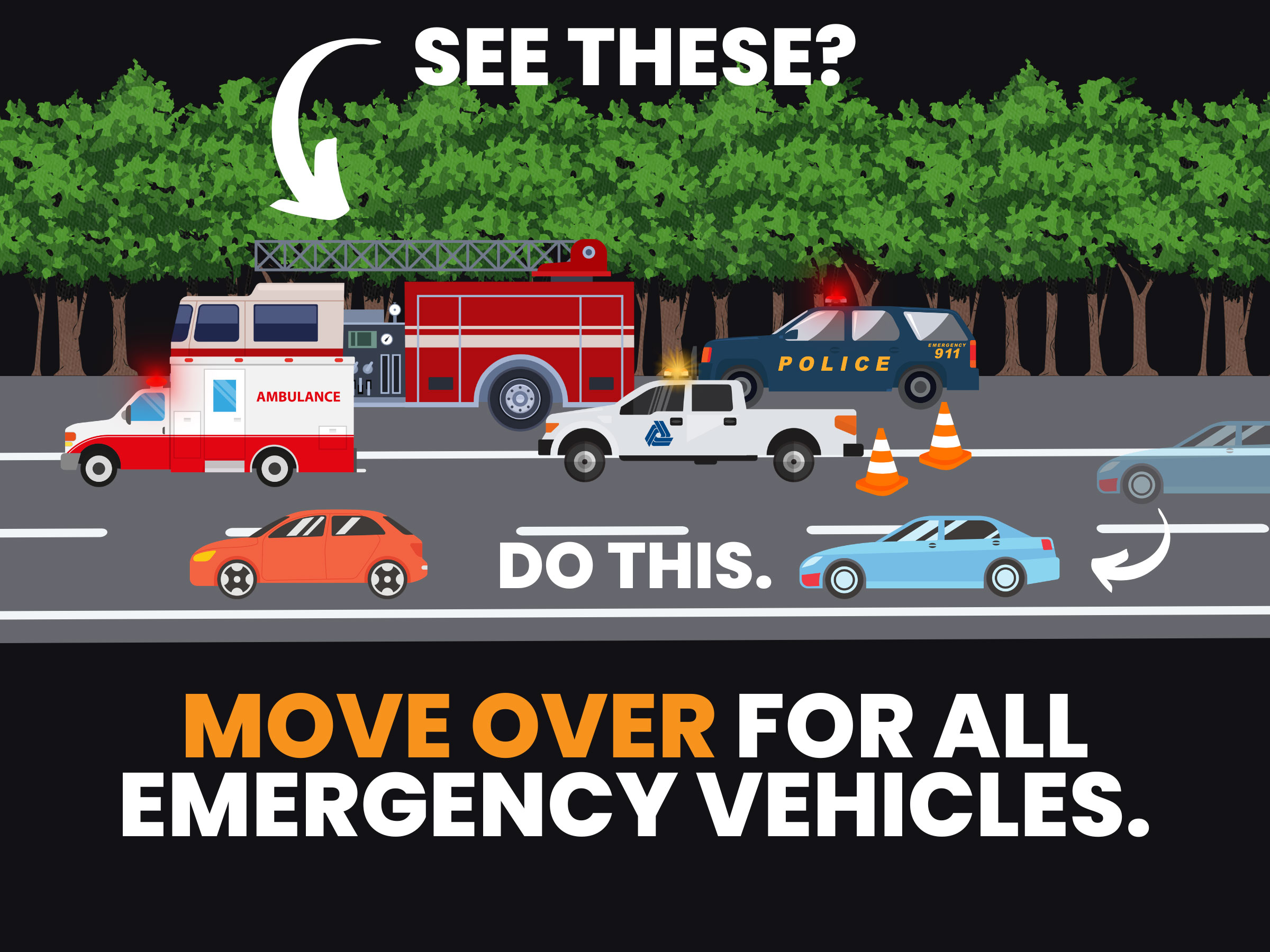
From Delaware Code: Upon approaching a stationary authorized emergency vehicle, when the authorized emergency vehicle is giving a signal by displaying alternately flashing red, blue, blue and white, red and white, red and blue, or red, white and blue lights, or upon approaching a stationary authorized vehicle of the Department of Transportation, which is giving a signal by displaying alternately flashing amber or red and amber lights, or upon approaching a stationary tow truck, which is giving a signal by displaying alternately flashing amber, white, or amber and white lights, a person who drives an approaching vehicle shall:
- Proceed with caution and yield the right-of-way by making a lane change into a lane not adjacent to that of such vehicle, if possible, with due regard to safety and traffic conditions, if on a roadway having at least 4 lanes with not less than 2 lanes proceeding in the same direction as the approaching vehicle: or,
- Proceed with caution and reduce the speed of the vehicle to a safe speed while passing such stationary vehicle, if changing lanes would be impossible or safe.
- Move Over Law PSA - This was prepared through a federal grant and involved members of the Delaware City Fire Company, other area Fire Departments, Delaware State Police, New Castle County Police and DelDOT Maintenance & Operations employees.
Higher Fines in Work Zones
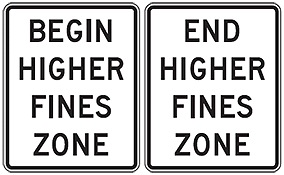 Travelling through highway work zones demands complete attention from motorists due to changed traffic patterns and unexpected or unusual conditions that are faced while driving through the work zone. Safety of the traveling public and the highway workers is of the utmost importance to the Delaware Department of Transportation and the Delaware State Police. Adherence to traffic laws is very important and this is why Delaware enforces higher fines for traffic violations within work zones.
Title 21, Section 4105(f) of the Delaware Code authorizes the assessment of fines that are double the normal fines for associated traffic offenses when these offenses are committed within the limits of the highway work zone. A highway work zone is defined by Delaware Code as extending from the first traffic control device informing road users of their approach toward a work area to the last traffic control device indicating that all restrictions are removed and normal vehicle operations can resume. This also includes all detour routes for highway construction or maintenance operations marked by traffic control devices. According to the Delaware Code, signs that notify the traveling public that higher fines are in place should be used but are not required for every project.
From Delaware Code:
The driver of a vehicle who violates any of the following sections of this title shall be fined not less than double the enumerated amount for a 1st offense when the violation occurs within any highway construction or maintenance area indicated by traffic-control devices.
- § 4102 relating to obedience to traffic laws
- § 4103 relating to obedience to authorized people directing traffic
- § 4107 relating to obedience to traffic-control devices
- § 4110 relating to flashing signals
- § 4114 relating to driving on the right side of roadway
- § 4115 relating to passing vehicles proceeding in opposite directions
- § 4116 relating to overtaking a vehicle on left
- § 4117 relating to when overtaking on the right is permitted
- § 4118 relating to limitations on overtaking on the left
- § 4119 relating to further limitations on driving to the left of center of roadway
- § 4120 relating to no-passing zones
- § 4122 relating to driving on roadways laned for traffic
- § 4123 relating to following too closely
- § 4164 relating to stop signs and yield signs
- § 4168 relating to general speed restrictions
- § 4169 relating to specific speed limits
- § 4175 relating to reckless driving
- § 4176 relating to careless or inattentive driving
- § 4177 relating to operation of vehicle while under the influence of alcohol and/or drugs
- § 4178 relating to stopping, standing or parking
- § 4184 relating to limitations on backing
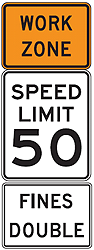 As used in this subsection, the phrase "within any highway construction or maintenance area indicated by traffic-control devices" shall mean that area between the first traffic-control device informing road users of their approach toward a work zone area until the last traffic-control device indicating all restrictions are removed and normal vehicle operations can resume. The phrase should also include detour routes for highway construction or maintenance marked by traffic-control devices. "Traffic-control devices" and "work zone" shall have the same meaning as adopted pursuant to § 147 of Title 17, as amended. "Highway construction and maintenance area" shall also include construction and maintenance for utilities or railroads within or adjacent to the highway rights-of-way.
Whenever practical, signs designed in compliance with regulations of the Department shall be appropriately placed to notify motorists that increased penalties apply for moving violations in construction or maintenance areas. However, the failure to post or improper posting of such signs shall not be a defense against a violation of this section.