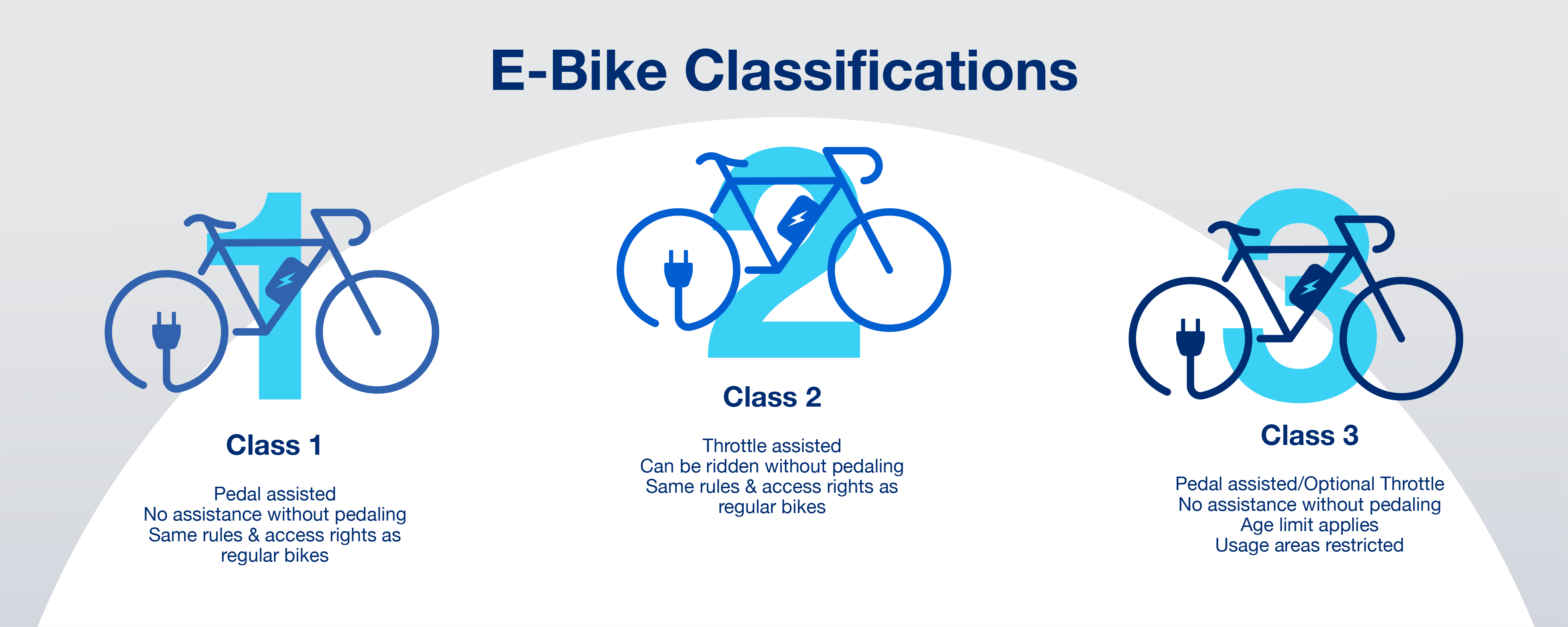
An electric bicycle is a bicycle with two or three wheels that is equipped with fully operable pedals,
a seat, and an electric motor of less than or equal to 750 watts that meets the requirements of one of the following classes.
Electric bicycles may be ridden anywhere bicycles are allowed, including streets, highways, roadways, shoulders, bicycle lanes, bikeways and shared-use paths.
Electric bicycles are not permitted on sidewalks when the electric motor is in use.
Ride at a safe speed. Slow down in congested conditions, when visibility is reduced, during other hazardous conditions.
ALERT: Some bicycles that look like E-bikes are mopeds or motorcycles.
 Gear and Visibility
-
A properly fitted bike helmet is your first and most important line of defense against severe brain injuries. Make sure it sits level and snug,
and the chin strap is securely buckled. Under Delaware Law, anyone under 18 years old is required to wear a helmet.
-
Wear bright colors during the day. At night, legally required front lights (usually white) and rear lights (red) are must-haves. Add reflective
vests or gear to maximize how visible you are to cars.
-
Install a bell or horn to alert pedestrians and other riders when you are passing or just shout, “On Your Left”. Essential Riding & Traffic Rules.
Essential Riding and Traffic Rules
-
In Delaware, e-bikes are classified as vehicles. You must stop at red lights and stop signs, ride with the flow of traffic when riding on a
roadway and use hand signals for all turns.
-
E-bikes reach higher speeds quickly, and their added weight means stopping takes longer. Regulate your speed in heavy traffic and when
approaching intersections. When riding on shared-use paths, do not exceed speeds greater than 20-mph.
-
Do not assume a driver or pedestrian sees you. Avoid the blind spots of cars and watch out for opening car doors in bike lanes.
-
Never wear earbuds or use your phone while riding. Your full attention should be on the road.
Know Where to Ride
E-bikes are generally permitted wherever traditional bicycles are allowed, including bike lanes, roadways, trails and shared-use paths.
Note: Local authorities may have stricter ordinances where e-bikes are permitted. E-Bike Maintenance & Battery Safety
Bike Maintenance and Safety
-
Because e-bikes are heavy, your brakes experience faster wear. Regularly check your brake system and cables to ensure you can stop safely.
-
Charge your e-bike battery on a flat, hard, and fire-resistant surface. Never leave the battery charging unattended for long periods or
overnight and unplug it once it reaches 100% to prevent overheating.